Why some visual systems are meant to be seen, not hidden
In most visual work, structure is invisible by design. Grids, hierarchies, spacing systems, and alignment frameworks exist to support an outcome, not to announce themselves. Once the work is finished, those systems disappear beneath surface, narrative, or decoration.
My work takes a different approach.
Here, structure is not a tool—it is the subject.
This is not an act of deconstruction or exposure. It is simply a shift in emphasis. The systems that normally remain hidden are allowed to remain present, shaping the composition openly rather than operating in disguise.
Structure Is Not Decoration
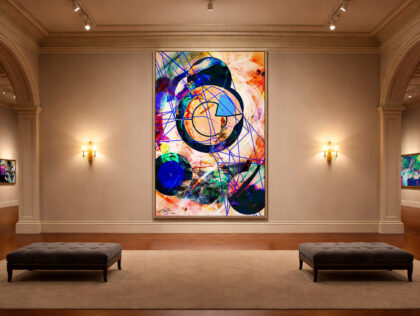
The work is not abstract, but it is also not illustrative. It does not depict systems symbolically or reference them metaphorically. Instead, it is constructed through the same principles that govern professional visual communication: alignment, proportion, hierarchy, repetition, and controlled variation.
These systems are not added for effect. They determine placement, tension, balance, and resolution. What emerges visually is the direct result of those decisions.
Complexity, when it appears, is not simulated. It is the byproduct of order.
What Professionals Recognize
After years of working inside structured visual environments, certain relationships become instinctive. Designers, engineers, pilots, and systems thinkers often recognize this immediately—not because it is explained, but because it feels familiar.
Others may not identify the structure explicitly, yet still respond to the balance, rhythm, and restraint of the composition. The work does not require specialized knowledge to be experienced, but it does reward those who bring it.
Neither reading is privileged. Both are valid.
Precision as Source Material
In this work, precision is not an aesthetic overlay. It is the source material itself.
Photographic elements, geometric forms, and layered compositions coexist because they are governed by the same organizational logic. Nothing is placed to suggest meaning. Everything is placed because it belongs where it is.
This approach resists narrative. It resists instruction. The viewer is not guided toward an interpretation, only invited to observe.
Why Nothing Is Explained
Explanation closes a loop too quickly.
By leaving systems intact but unnamed, the work preserves the possibility of discovery. Some viewers trace relationships immediately. Others encounter the work first through color, texture, or spatial tension. Over time, deeper connections may emerge—or they may not.
The work remains complete either way.
In Closing
When structure becomes the subject, meaning is no longer delivered. It is encountered. The work does not ask to be decoded, only to be considered.
Attention is enough.
This article reflects themes that recur throughout my aviation‑informed visual practice, where structure, precision, and non‑literal systems shape the work at an institutional scale. An overview of this approach can be found here.