How aviation perspective reshaped the way I think visually
In aviation, navigation rarely relies on visible paths. There are no roads in the sky. Orientation depends on reference systems that can’t be seen directly—coordinates, vectors, headings, relative position. You operate within a structure that exists whether or not it is visible.
That way of thinking quietly changes how you perceive space.
Rather than focusing on objects, attention shifts to relationships. Position matters more than appearance. Orientation replaces destination. What’s important is not what something looks like, but where it exists in relation to everything else.
Thinking in Reference Systems
Flying trains the mind to operate within frameworks that are abstract but exact. A heading is meaningless without context. A position only matters relative to another position. Precision is not optional—it is foundational.
That logic carries directly into my visual work.
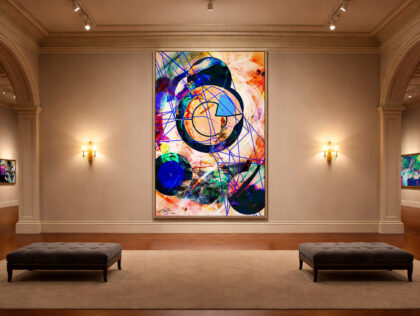
Compositions are not built around focal points or narrative cues. They are organized through reference—alignment, spacing, directional tension, and proportional balance. Nothing is placed to attract attention. Everything is placed to establish orientation.
Orientation Over Illustration
The work does not depict aviation. It does not illustrate navigation. Instead, it reflects the underlying logic of operating within invisible systems.
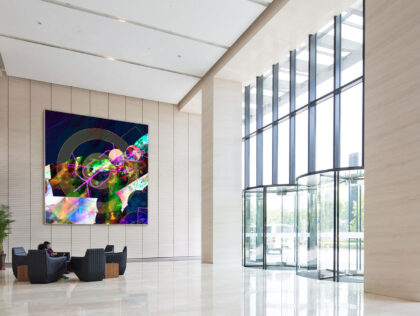
Some viewers recognize this immediately, even if they can’t articulate why. Others experience the work as balanced, controlled, or quietly tense. The structure functions regardless of how it is perceived.
Just as in flight, the system doesn’t announce itself. It simply works.
Why Meaning Isn’t Labeled
In aviation, labeling every reference would be counterproductive. The system only functions when it is internalized.
The same principle applies here. Naming specific references would collapse the experience into explanation. By keeping the structure intact but unnamed, the work allows recognition to occur naturally—or not at all.
Both outcomes are valid.
Shared Space, Different Readings
Those with aviation experience may notice relationships that feel familiar. Others may respond to color, texture, or spatial restraint. Neither viewer is missing anything.
The work does not privilege expertise. It accommodates it.
In Closing
Navigation without roads teaches you to trust structure you cannot see. This work operates the same way. It is guided by systems that remain present whether they are identified or simply felt.
The viewer doesn’t need a map—only attention.
This article reflects themes that recur throughout my aviation‑informed visual practice, where structure, precision, and non‑literal systems shape the work at an institutional scale. An overview of this approach can be found here.