Why the camera functions as a tool, not a subject
Photography is often understood as a means of representation. It captures, records, and describes. The resulting image becomes the focus, carrying narrative or emotional weight.
In my work, photography serves a different role.
It functions as an instrument.
The camera is used to collect visual information—light, texture, edge, alignment—rather than to produce a finished image. What matters is not what is depicted, but what is measured.
Seeing Through Constraint
Working with a camera imposes immediate limits. Frame, exposure, depth, and perspective are fixed by choice and circumstance. These constraints are not obstacles. They are structure.
That discipline trains attention toward relationships rather than subjects. It encourages precision over expression. Decisions must resolve within the conditions present.
This way of working carries directly into the compositions that follow.
From Capture to Construction
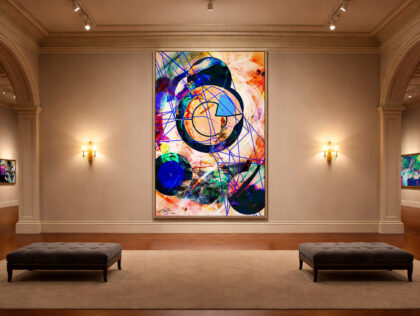
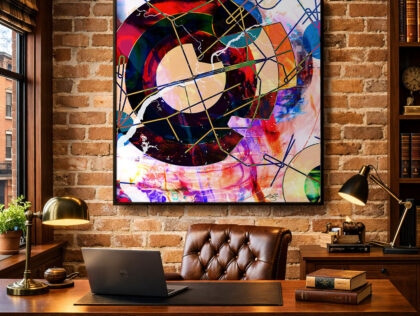
Photographic elements are not treated as standalone images. They are integrated, layered, and repositioned according to the same organizational logic that governs the entire composition.
Geometry, alignment systems, and spatial hierarchy determine how photographic material behaves. The photograph does not lead. It participates.
Nothing is illustrative. Nothing is symbolic.
Precision Without Description
The use of photography often implies realism or documentation. Here, realism is irrelevant. Precision is not used to describe something—it is used to structure it.
Edges matter. Transitions matter. Overlap and spacing carry more weight than content. The camera provides accurate material, but meaning emerges through how that material is organized.
Why the Image Is Secondary
By the time a composition resolves, the origin of individual elements becomes less important than their relationship to one another. The photograph no longer functions as a record. It becomes part of a system.
This approach resists narrative. It resists interpretation. The work does not ask what the image represents, only how it behaves.
In Closing
When photography is treated as an instrument rather than an image, it stops describing the world and starts organizing it. The result is not documentation, but structure—quiet, precise, and intentional.
This article reflects themes that recur throughout my aviation‑informed visual practice, where structure, precision, and non‑literal systems shape the work at an institutional scale. An overview of this approach can be found here.