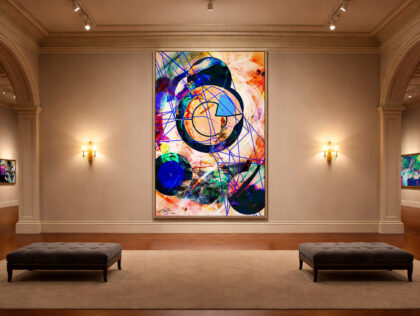
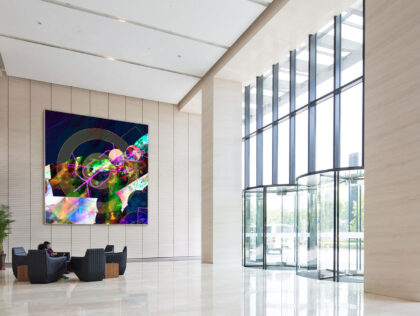
Creative breakthroughs rarely follow predictable flight paths. Like a pilot navigating through unexpected turbulence, artists must learn to embrace the uncharted territories that emerge during the creative process. This exploration of aviation-inspired digital art represents more than just a visual piece—it embodies the intersection of technical precision and artistic intuition, where the disciplined world of flight training meets the boundless realm of creative expression.
The genesis of this artwork emerged from a period of intense creative resurgence, where one idea sparked another in rapid succession. As any pilot knows, preparation and technique are essential, but it’s often the unexpected moments—the sudden wind shear, the unplanned route deviation, or the serendipitous discovery of a perfect landing approach—that test true skill and reveal new possibilities.
The Pilot’s Canvas: Understanding Aviation as Creative Foundation
Flight Training as Artistic Discipline
Learning to become a pilot presents one of the steepest learning curves in any professional field. The volume of information required spans multiple disciplines: aviation law, physics, meteorology, physiology, and the development of precise motor skills. Unlike driving a car where you simply follow established roadways, flying requires navigating three-dimensional space without visible pathways.
This complexity mirrors the artistic process beautifully. Just as pilots must master multiple systems simultaneously—navigation, communication, weather interpretation, and aircraft control—contemporary digital artists must synthesize various technical skills, creative theories, and technological tools to create cohesive works.
Navigation Without Roads: The Artist’s Journey
Consider the fundamental challenge every pilot faces: How do you navigate from point A to point B when there are no roads in the sky? What happens when clouds obscure your visual references? How do you account for wind that pushes you off course without your awareness? These questions that every student pilot must answer translate directly into artistic challenges.
In creating this piece, the same principles apply. The artist must navigate through creative decisions without predetermined pathways. When inspiration becomes obscured by doubt or technical challenges, alternative navigation methods—intuition, experience, and systematic approach—become essential tools.
The aviation world’s emphasis on safety procedures and systematic approaches provides a fascinating counterpoint to artistic spontaneity. Pilots have lost their lives by not following proper procedures, yet the most memorable flights often involve adapting to unexpected conditions with creativity and skill.
The Hybrid Technique: Photography as Paintbrush
Redefining Photographic Expression
This artwork challenges traditional photography by employing the camera not as a documentary tool, but as a paintbrush. Rather than capturing scenes in conventional ways, the photographic elements serve as raw material for creating organic textures, energy, and movement within the composition.
This approach reflects the pilot’s relationship with their aircraft. A skilled pilot doesn’t simply operate the machine according to manual specifications—they develop an intuitive connection that allows the aircraft to become an extension of their creative problem-solving abilities. Similarly, when photography becomes a paintbrush, the camera transcends its mechanical function to become a fluid creative instrument.
Creating Organic Elements Through Technology
The photographic components in this piece generate organic forms that provide motion, energy, and texture. These elements aren’t meant to be recognizable as traditional photographs. Instead, they function as deliberate elements that contribute to the overall composition’s emotional and visual impact.
This technique mirrors how pilots use instrumental readings not as literal representations of reality, but as interpretive data that informs decision-making. The altimeter doesn’t show you the ground—it provides information that helps you navigate safely through invisible three-dimensional space.
Geometric Precision Meets Organic Flow
The Contrast of Systems
One of the most striking aspects of this artwork is how geometric precision contrasts with organic, flowing elements. The crisp lines of graphic art provide structure and definition, while the softer, more fluid photographic elements create movement and emotional depth.
This duality reflects the pilot’s constant balance between rigid procedural adherence and adaptive creativity. Flight plans provide geometric precision—specific headings, altitudes, and waypoints—yet weather, traffic, and mechanical considerations require organic responses that can’t be predetermined.
Color as Navigation Tool
The strategic use of color in this piece—including variations in brightness and hue—creates visual navigation paths through the composition. Just as pilots use different colored lights and instruments to quickly identify critical information, the artwork employs color contrast to guide the viewer’s attention and create emotional responses.
The interplay between smooth and textured surfaces adds another layer of navigational complexity. These variations help the eye move through the composition while creating focal points that anchor the overall design.
The RNAV Series from Vectors to Final
Understanding the Title’s Significance
“Vectors to Final” draws directly from aviation. While flying, vectors refer to heading assignments given by air traffic control to position aircraft for approach to landing. The “final approach” is the last segment of the landing pattern, where the pilot aligns with the runway and commits to touchdown.
This terminology perfectly captures the artistic journey represented in this series. Each creative decision acts as a vector, positioning the work toward its final resolved state. The process requires constant course corrections, altitude adjustments, and speed modifications—all while maintaining focus on the ultimate destination.
The Series Evolution
Like a pilot’s progression through different aircraft and increasingly complex flight scenarios, this series represents an evolution in artistic technique and conceptual depth. Each piece builds upon previous discoveries while introducing new challenges and solutions.
The aviation inspiration provides consistent thematic grounding while allowing for tremendous creative variation. Just as every flight involves the same fundamental principles applied to unique circumstances, each artwork in the series maintains core conceptual elements while exploring different visual territories.
Technical Innovation in Digital Art
Bridging Traditional and Contemporary Methods
This artwork represents a significant advancement in digital art methodology by successfully bridging traditional photographic techniques with contemporary digital manipulation. The result transcends simple photo editing to create an entirely new form of visual expression.
The technical approach mirrors aviation’s evolution from visual flight rules to instrument flight rules. Early pilots navigated by sight alone, but modern aviation requires the ability to fly safely without visual reference to the ground. Similarly, this artwork moves beyond traditional visual representation to navigate through pure artistic expression.
The Role of Serendipity in Creation
Perhaps most importantly, this piece demonstrates how unexpected discoveries can become the most valuable tools in an artist’s arsenal. Just as pilots must remain alert to changing conditions and ready to adapt their plans, artists must stay open to serendipitous moments that can transform their work.
Technical mastery and inspired vision are essential, but the willingness to embrace and nurture unexpected developments often distinguishes good art from great art. The aviation parallel is clear: you can learn procedures, master techniques, and study weather patterns, but your response to unexpected turbulence reveals your true skill level.
Technical Innovation in Digital Art
This inaugural piece in the VTF series establishes a compelling new direction in contemporary digital art. By drawing inspiration from aviation training principles, the artwork creates a unique visual language that speaks to both technical precision and creative intuition.
The successful integration of photography-as-paintbrush techniques with geometric graphic elements demonstrates how seemingly disparate approaches can create unified, powerful artistic statements. Like a pilot successfully navigating through challenging weather to reach their destination, this artwork charts a course through complex creative territory to arrive at something truly original.
The aviation metaphor extends beyond mere thematic inspiration to become a fundamental structural element of the creative process. Just as pilots must master multiple systems simultaneously while remaining adaptable to changing conditions, this artwork successfully synthesizes various technical approaches while maintaining openness to unexpected creative discoveries.
As the first piece in what promises to be an evolving series, this work establishes both a technical foundation and conceptual framework for future exploration. The vectors have been set, the approach has been established, and the final destination promises to reveal new territories in contemporary digital art.
For viewers and fellow artists, this piece offers an invitation to consider how disciplined technical training can enhance rather than constrain creative expression. Like learning to fly, mastering these hybrid techniques requires dedication, practice, and the courage to navigate without visible roads. The destination, however, offers perspectives impossible to achieve from ground level.