
Navigating Fear Across Professional Landscapes
Fear is an inevitable part of professional growth. At some point, everyone encounters the choice between remaining within familiar boundaries or moving into uncertainty. Growth does not occur without that tension.
Across creative direction, home inspection, and aviation, I’ve encountered this repeatedly. Each field presented different challenges, but the underlying experience was consistent: fear signals that something important is at stake.
Reinventing Professional Identity
My career began in creative direction, where I developed skills in visual communication, concept development, and project leadership. The work required precision and clarity, but the environment was one I understood.
Over time, I felt a pull toward something entirely different—home inspection. This was not an incremental shift. It required stepping away from an established identity and into a field where I had limited experience.
The transition carried real risk. Financial instability was not abstract; it was immediate and measurable. Starting a business meant long hours with uncertain returns and no guaranteed outcome. At the same time, many competitors entered the field with construction backgrounds, creating a clear gap in experience.
Rather than avoiding that gap, I approached it directly. I assessed what I already understood, then focused on what I needed to learn. Skills developed in creative work—attention to detail, communication, structured thinking—translated more effectively than expected.
Learning became the primary mechanism for managing uncertainty. Technical manuals replaced casual reading. Weekends shifted toward training environments. Conversations with experienced inspectors became essential sources of insight.
Equally important was recognizing the role of humility. Operating without prior expertise required acknowledging limitations while continuing to move forward. That combination—awareness and action—became foundational.
Managing Complexity in Aviation
Aviation introduced a fundamentally different level of pressure. Unlike earlier transitions, the stakes were immediate and unforgiving. Precision was not optional—it was required.
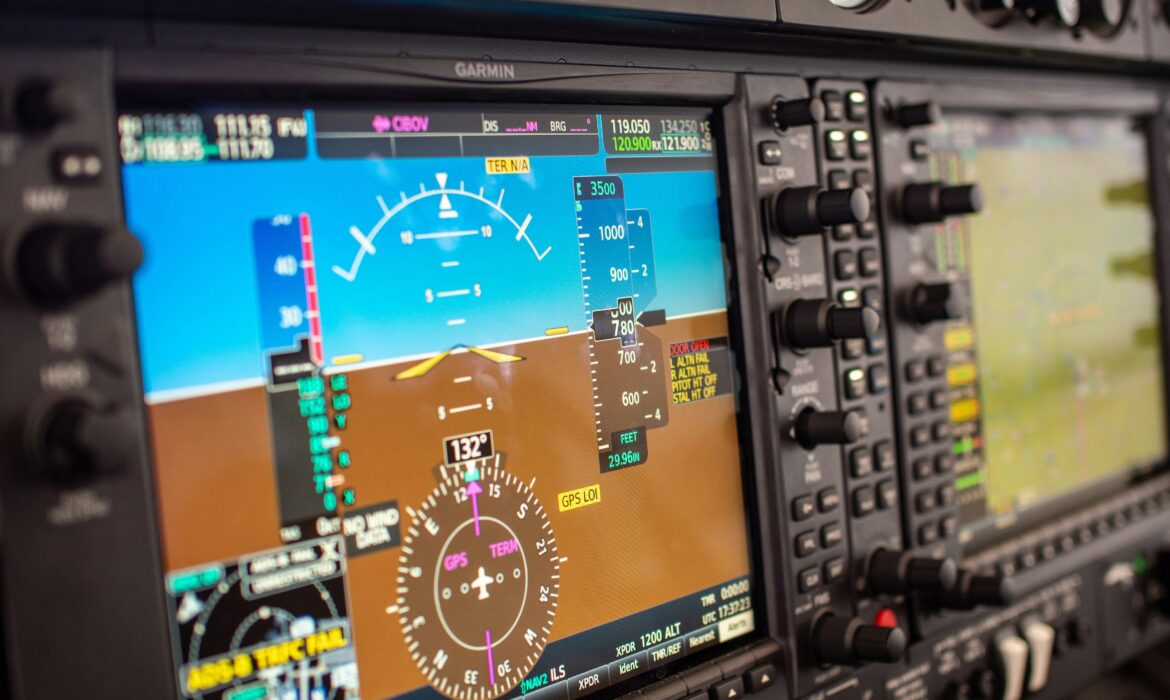
One of the most defining experiences came during early instrument flight. Inside cloud cover, external reference disappears entirely. Navigation depends solely on cockpit instruments. The challenge is not only technical—it is psychological. Sensory perception conflicts with instrument data, creating a strong impulse to trust instinct rather than information.
Maintaining control in that environment requires discipline. Attention must remain fixed on what is reliable, even when it conflicts with perception.
Other conditions introduced additional layers of complexity. High‑traffic airspace requires constant communication, system management, and situational awareness. Decisions must be made quickly, often while processing multiple inputs simultaneously.
Unexpected events reinforce the same principle. Emergency procedures, traffic conflicts, and rapidly changing conditions all demand clarity under pressure. In one instance, while on final approach at a non‑towered airport, another aircraft crossed directly in front of mine. The response required immediate adjustment and complete focus.
These moments are not exceptional—they are part of the environment. What they demand is preparation, consistency, and the ability to maintain composure when conditions degrade.
Operational Responsibility in Home Inspection
In home inspection, the nature of risk changes again. The consequences are less immediate, but no less significant.
Missed details can result in financial loss, structural failure, or safety hazards. The margin for oversight is narrow, and responsibility extends directly to the client.
In practice, this requires a systematic approach. Checklists become essential—not as routine, but as a safeguard against omission. Over time, those systems evolve with experience, incorporating new conditions and recurring patterns.
Equally important is observation. Many critical issues are not obvious. They present as small inconsistencies—subtle signals that require attention rather than assumption.
Communication plays a central role as well. Explaining findings to clients often reinforces understanding and reveals additional context. What begins as a technical process becomes an exchange that improves accuracy and clarity.
Structured Approaches to Fear
Across these fields, certain patterns emerge. Fear does not disappear, but it can be structured and managed.
Preparation consistently reduces uncertainty. Detailed understanding—whether of systems, environments, or processes—creates stability where ambiguity would otherwise exist.
Breaking complex tasks into smaller components also improves control. Large challenges become manageable when approached incrementally.
Failure contributes directly to this process. In aviation, structured debriefing formalizes learning. That same principle applies elsewhere: mistakes and near‑misses provide actionable information when examined objectively.
Finally, environment matters. In aviation, communication about uncertainty is required for safety. Applying that standard more broadly—acknowledging limitations, asking questions, and sharing concerns—creates stronger outcomes.
What Fear Reveals
Over time, fear becomes less about avoidance and more about information. It identifies points of responsibility, complexity, and consequence.
In creative work, it may signal the need to push beyond established solutions. In inspection, it reinforces attention to detail and accountability. In aviation, it demands preparation and discipline.
The pattern is consistent: when properly engaged, fear sharpens focus rather than obstructing it.
In Closing
Fear does not exist to be eliminated. It exists as a condition of growth.
Across different environments and responsibilities, its presence remains constant. What changes is the response—whether it limits action or informs it.
When approached with structure, preparation, and clarity, fear becomes useful. It defines boundaries, highlights risk, and reinforces what matters.
Growth occurs not in its absence, but through the ability to operate within it.
