Why Simplicity Is Hard
We tend to think complexity requires more skill than simplicity. More things must mean more work. More detail must mean more expertise. A complicated image must have required more from the artist than a simple one. I’m not convinced. Sometimes simplicity is much harder.
The Temptation to Add
Adding something is easy. If a composition feels empty, add another shape. If the color feels flat, add another color. If the idea feels incomplete, add another explanation. There is always something else you can put into the work. Removing something is harder. Once you’ve invested time in an element, you become attached to it. You start defending it. You tell yourself it contributes something. Sometimes it does. Sometimes you’re just reluctant to let it go.
Editing Is Creating
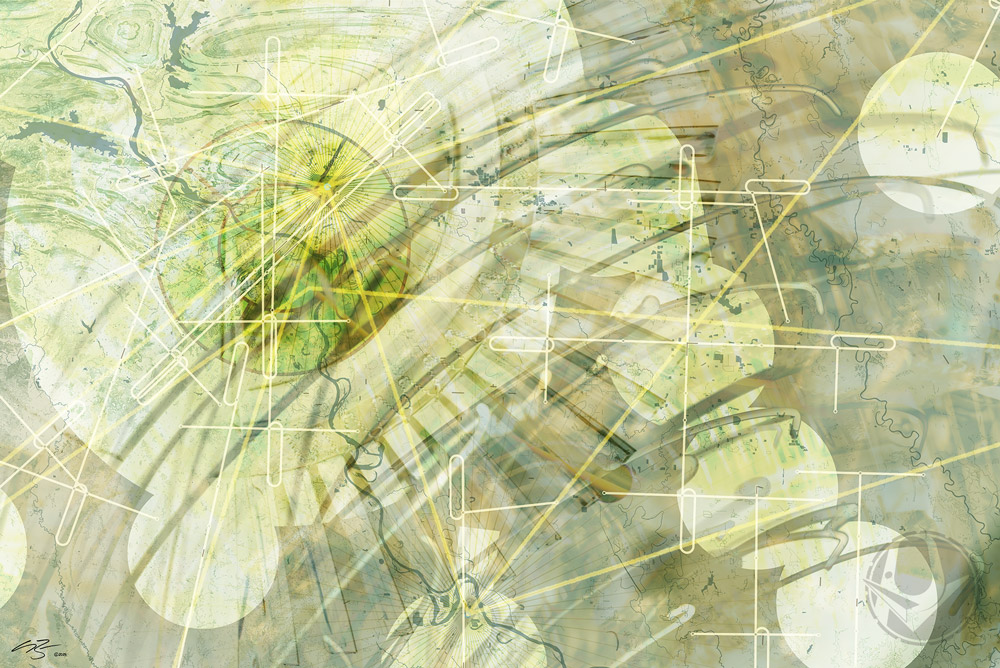
One of the most important lessons I’ve learned through decades of creative work is that editing isn’t separate from creating. Editing is creating. Every element that remains has survived a decision. Every element that disappears has also contributed to the final result. This is particularly important in my own work because the compositions depend heavily on relationships. Changing one element can change another. Moving something a few inches can alter the balance. Removing something can suddenly make another element more important. The system changes.
Knowing When to Stop
There is also the problem of knowing when the work is finished. Artists can continue working indefinitely. There’s always another adjustment. Another color. Another refinement. Another possibility. Eventually, you have to decide that the piece has reached the point where additional work would make it different rather than better. That decision is not always obvious. Sometimes the best decision is to stop touching it.
The Value of Restraint
I think restraint is one of the less celebrated creative skills. It doesn’t announce itself. Nobody looks at an empty area of a composition and says, “What an incredible decision to leave that space empty.” However, that space may be doing important work. It gives the eye somewhere to go. It separates competing elements. It gives space to breathe. It establishes rhythm. It creates tension. It allows something else to become important. Absence can be a compositional decision.
The Expensive Simplicity
The final piece may look simple. The simplicity may have required hundreds of decisions. That’s why I have come to think of simplicity as one of the most expensive things an artist can produce. Not expensive because of materials. Expensive because of everything you have to learn before you know what you can leave out. And sometimes, despite all that experience, creativity still goes quiet.
That is where the story gets more personal.