Beyond Representation
When I was young, I assumed that art was supposed to depict something such as a person, a place, an object, or a scene. That isn’t surprising. Most of us are introduced to art through representation. We learn to draw what we see. We learn perspective. We learn proportion. We learn how to make something look like the thing we’re observing. Those skills matter, but eventually a question appears – what happens when the thing you want to communicate isn’t a physical object?
Some Ideas Don’t Have a Shape
You can photograph a building, but you can’t photograph structure. You can paint an airplane, but you can’t paint the feeling of moving through a system governed by precision, decision-making, and constantly changing conditions in quite the same way. You can depict a road, but a road isn’t the same thing as the experience of moving from one place to another. Some ideas are better communicated through relationships than through representation. That’s where my work began to move in a different direction.
Structure as a Visual Language
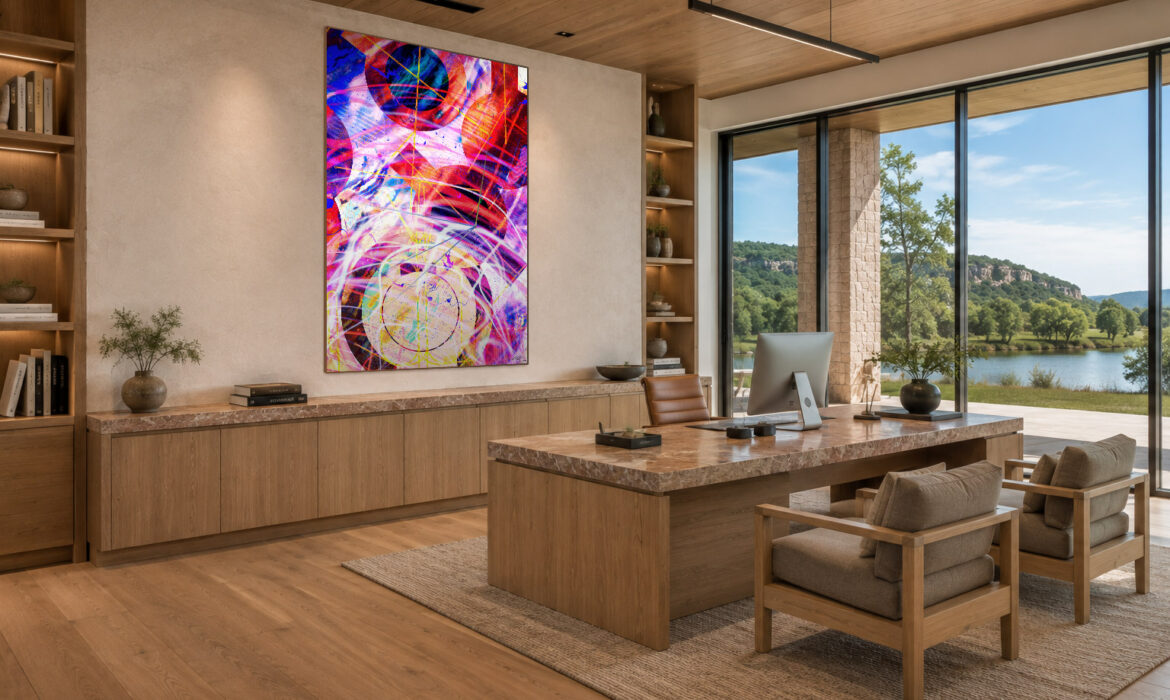
The work I create through Vectors to Final draws from aviation, but it isn’t intended to illustrate aviation in the literal sense. I’m not trying to paint an airplane. Rather, I’m interested in the systems surrounding it such as position, direction, relationship, movement, or even boundaries. These ideas can exist visually without being literally depicted. The aviation connection becomes part of the framework rather than the subject sitting on top of it. That distinction matters to me.
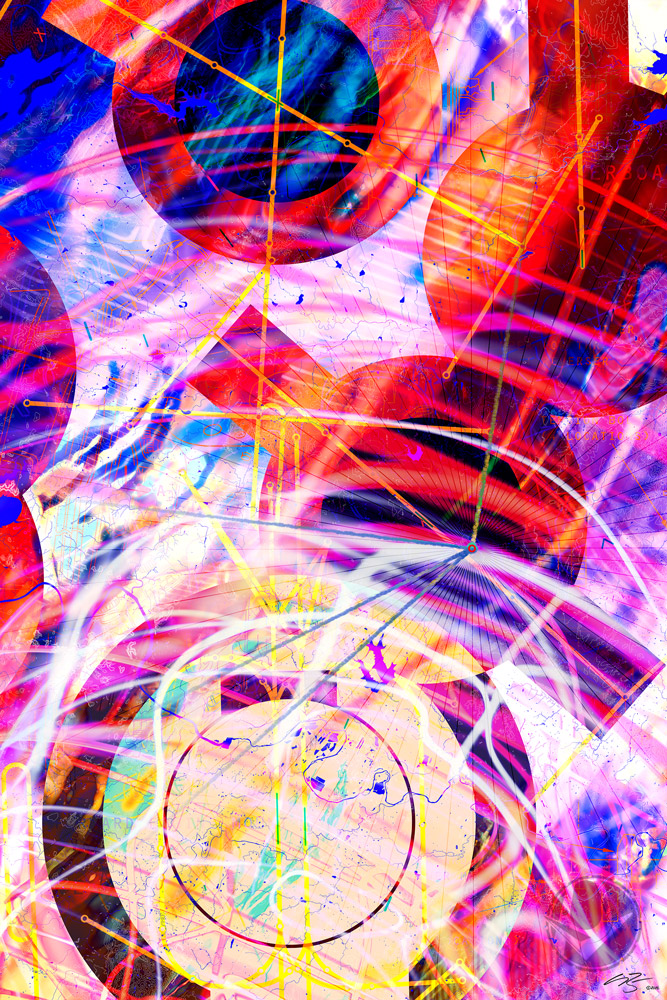
ELLBJ is a useful example. There are aviation ideas embedded within the work, but the piece doesn’t require the viewer to identify them in order to experience the composition. Someone familiar with aviation may notice things another viewer doesn’t. That person may recognize a relationship or reference that feels familiar. Another viewer may see only the composition itself. Both experiences are legitimate. The work doesn’t require a technical explanation to function. That is intentional.
Art Doesn’t Need an Instruction Manual
I’ve never been particularly interested in giving the viewer a list of things they’re supposed to find. Once you explain everything, the experience can become an exercise in recognition rather than discovery. I’d rather leave some room. If someone notices an aviation reference, great. If someone responds to the color, that’s fine. If someone is drawn to the balance of the composition without knowing anything about aviation, that works too. The viewer brings something to the work.
Their experience is part of the experience of the piece.
Communication Without Illustration
This is why I don’t believe art has to look like the thing it is communicating. Music is an obvious example. A composer doesn’t need to paint a picture of sadness in order to create music that feels sad. A photographer doesn’t need to photograph a clock to communicate the passage of time. A designer doesn’t need to draw an arrow to create a sense of direction. Sometimes relationships communicate more effectively than literal representation. That is what interests me.
What the Work Is Really Doing
The work is not asking the viewer to solve a puzzle. It is asking the viewer to look. The structure is there whether it is recognized or not. The relationships are there whether someone knows their aviation origins or not. The decisions are there whether they are visible or not. And that brings us back to where this series began. What you see depends partly on what you’ve learned to notice. What you recognize depends partly on what you’ve experienced, and what you experience in a piece of art may have as much to do with the person standing in front of it as the person who created it.
Art isn’t defined only by what it looks like. Sometimes its most important qualities are the things you can’t immediately see. That brings us to another common assumption about creative work:
If the finished result looks effortless, perhaps the artist was simply gifted.
I’m not sure that’s how it works.